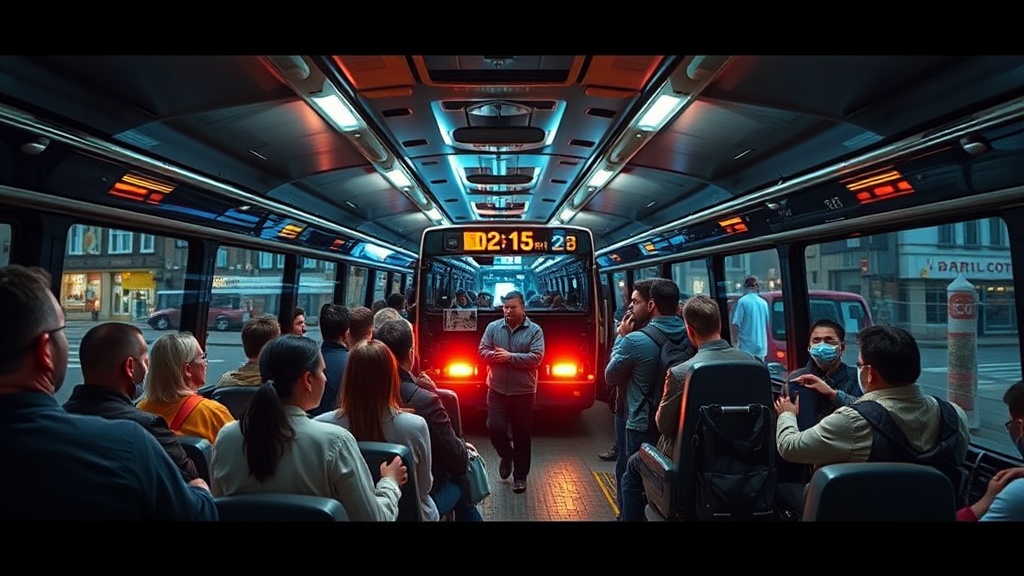
Organizing Shared Transport for Large Groups Without the Chaos

Imagine this: your group of eight arrives at a bustling train station in Florence. The sun is beating down, the luggage is heavy, and everyone is staring at a map with blank expressions. One person thinks they should call a fleet of taxis, another is adamant about finding a bus, and a third is convinced they can walk three miles with four suitcases. This is where most group trips fall apart—not because of the destination, but because the logistics of getting from point A to point B were never actually decided. When you travel with a crowd, transportation isn't just a detail; it's the backbone of your daily schedule.
The goal isn't just to move people; it's to move them efficiently without leaving anyone behind or blowing the budget. Whether you're splitting a van in the mountains or coordinating subway passes in a major city, you need a system. I've seen too many trips stalled by the "where are we going?" debate because the group lacked a unified transport plan. Let's look at how to build a logistical framework that keeps the group moving.
How do we decide between public transit and private transport?
This is the first major decision point for any group. The choice usually comes down to a trade-off between cost and control. Public transit—trains, buses, or subways—is almost always the cheapest option. It works well for smaller groups or highly active travelers who don't mind a bit of walking. However, it requires everyone to be on the same page regarding timing. If one person misses the 10:15 AM train, the whole group might feel the pressure of waiting.
Private transport, like a pre-booked shuttle or a large van rental, offers a level of predictability that public transit can't match. You have a set vehicle, a set driver, and a set price. This is ideal for groups with varying energy levels or those carrying significant luggage. If you're traveling in Europe, check the SeatGuru or similar resources to understand how much space you'll actually have for bags. If you're in a US city, use ride-share apps to check the price of an XL vehicle versus several standard cars. Sometimes, two Uber XLs are actually more expensive and much more chaotic than one pre-booked private van.
| Transport Type | Pros | Cons |
|---|---|---|
| Public Transit | Low cost, authentic experience | Unpredictable timing, luggage struggles |
| Ride-Share (XL) | Convenient, door-to-door | Hard to find multiple cars at once |
| Private Van/Shuttle | High control, predictable | Higher upfront cost, fixed routes |
What is the best way to handle different passenger budgets?
Money is the biggest friction point in group travel. When one person wants to take the luxury private car and another wants to take the bus, things get awkward fast. To avoid this, you must establish a "base level" of transport. Decide on a standard mode of travel that everyone can afford. If the group decides on a private van, ensure the cost is transparently broken down per person before the trip begins.
If some members of the group want to upgrade—for example, taking a taxi from the hotel to a restaurant while the rest take the metro—that's fine, but the primary plan must remain the group standard. I always suggest using an app like Splitwise to track these expenses in real-time. It prevents the "who owes what" argument at the end of a long day. If the group spends $120 on a van, it's much easier to see it as $15 per person rather than a massive, daunting expense.
How can we prevent group members from getting lost?
Even with a great plan, people wander off. It's a reality of group travel. The key is to have a "rally point" and a "rally time." Instead of telling everyone to "meet at the station," tell them to "be at the north entrance of the station by 2:00 PM." This gives a buffer for the person who is running late. If you're using public transit, ensure everyone has the offline map downloaded on their phones. Google Maps is great, but it doesn't work well when you're in a subway tunnel with no signal.
I also recommend a "hub and spoke" model for your itinerary. This means the group travels together for the major legs of the journey (like from the airport to the hotel) and then breaks into smaller sub-groups for individual activities. This reduces the pressure on one person to lead the entire group at all times. It also allows the person who wants to sleep in to stay back without feeling like they're ruining the day for the high-energy travelers.
When booking transport, always check the baggage policies. There is nothing worse than arriving at a train station with five large suitcases only to find out the train's luggage area is already full. You can find detailed luggage requirements for many international rail lines on the official Eurail website. Knowing these details ahead of time prevents that panicked, mid-trip scramble to find a way to move your stuff.
Lastly, don't forget to account for the "buffer time." If a train departs at 4:00 PM, your group should be aiming to be at the platform by 3:30 PM. This accounts for the inevitable bathroom break, the lost water bottle, or the person who forgot their ticket. A group that is always rushing is a group that is always stressed. Build in the slack so you can actually enjoy the scenery instead of just staring at your watch.