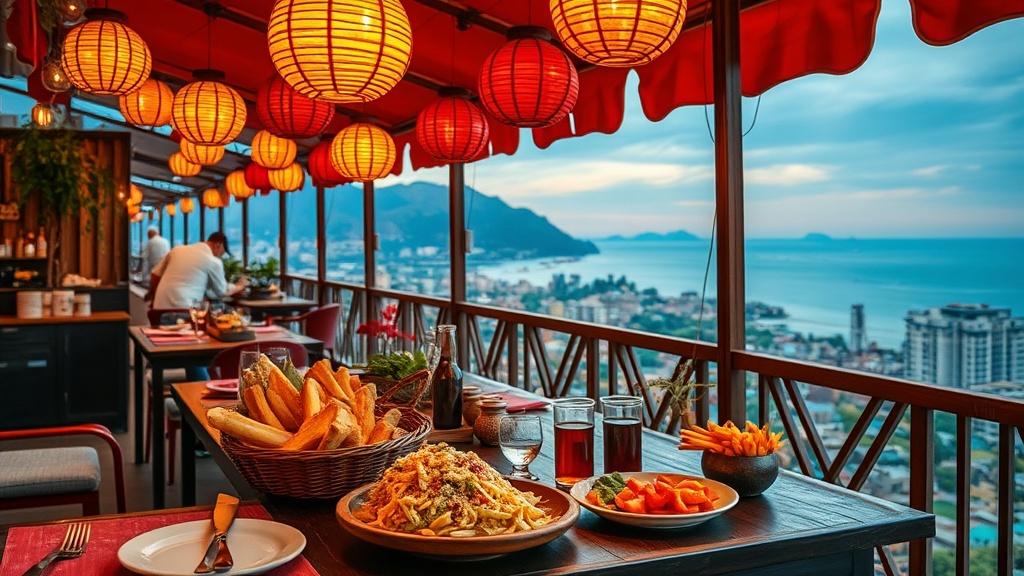
Finding a Destination That Satisfies Every Appetite

A steaming bowl of spicy tom yum soup sits on a low wooden table in a Bangkok night market. The scent of lemongrass and lime leaves cuts through the humid air, competing with the smell of grilled pork skewers nearby. One person in your group is diving into the spicy broth, while another is scanning the menu for a mild Caesar salad, and a third is staring hopefully at a vegan street food stall. This is the reality of group travel: the culinary divide. This post breaks down how to select a destination that balances diverse dietary needs, food cultures, and budget-friendly dining options so no one ends up hungry or frustrated.
Planning a trip around food sounds easy until you realize your group has one vegan, one gluten-free traveler, one person who only eats plain pasta, and one person who wants to try fermented shark. If you don't plan for these differences early, you'll spend your vacation arguing about where to eat or—worse—sitting in a restaurant where half the group is unhappy. We're looking at how to vet a destination's food accessibility before you even book the flights.
How do you choose a food-friendly destination?
The best way to choose a food-friendly destination is to identify the "lowest common denominator" of your group's dietary restrictions and cross-reference them with the local food culture. If your group is heavy on vegans, a destination like Italy might feel restrictive because of the heavy reliance on cheese and meat, whereas a city like Berlin or even parts of California offers endless plant-based options. You need to look at the intersection of what people can eat and what they want to eat.
I always tell my clients to check two things before committing to a location: the density of specialized grocery stores and the prevalence of English-language menus or translation-friendly food cultures. If you're heading to a remote part of rural Japan, even if the food is incredible, the language barrier regarding allergens can be a massive stressor. You might want to check the Wikipedia page for food allergies to understand the specific risks your group members might face before you dive into a deep dive of local cuisine.
Consider these three categories when vetting a location:
- The Dietary Baseline: Can everyone find a safe meal? (e.g., a gluten-free traveler in a Mediterranean country).
- The Culinary Variety: Is there a mix of high-end dining and quick, cheap eats?
- The Accessibility Factor: Are there grocery stores or specialized cafes nearby for those who need to "control" their food?
Don't underestimate the importance of a "safe" food option. Sometimes, the most successful group trips involve a destination that has a reliable chain or a specific type of cuisine that everyone agrees on. It's not about being fancy; it's about making sure the person with Celiac disease isn't just eating a side of plain rice for three days straight.
If you're worried about the logistics of keeping everyone fed, you might also want to look into managing shared snacks and food supplies to keep the mood high during transit.
What are the best types of food cultures for groups?
The best food cultures for groups are those that prioritize customization, transparency in ingredients, and a high volume of diverse dining options within a small radius. You want a place where "ordering style" doesn't dictate the entire meal. For example, a culture that relies heavily on communal, pre-set platters (like certain traditional family-style dining) can be a nightmare if one person has a severe allergy or a strict lifestyle choice.
I've seen many trips fall apart because the group chose a destination with a very rigid, traditional food structure. If you are in a place where the menu is fixed or the chef decides everything, the person with the dietary restriction becomes a social outlier. Instead, look for destinations known for "build-your-own" styles or highly adaptable cuisines.
| Food Culture Type | Pros for Groups | Cons for Groups |
|---|---|---|
| Adaptable/Modular (e.g., Mediterranean, Mexican) | High customization; easy to find veggie/GF options. | Can get expensive if everyone orders custom modifications. |
| Strict/Traditional (e.g., Traditional French, High-end Japanese) | Incredible quality; highly curated experiences. | Very difficult for vegans or those with strict allergies. |
| Cheap, fast, and incredibly diverse. | Hygiene concerns and difficulty communicating specific needs. |
When you're looking at a destination, don't just look at the "top rated" restaurants on Yelp or TripAdvisor. Look at the variety of the neighborhood. If you're staying in a hotel, check if there is a Google Maps view of the surrounding area. If all the restaurants within walking distance are the same type of cuisine, you're setting yourself up for a "food fatigue" situation by day three.
The "Food Fatigue" Trap
Food fatigue is real. It happens when the group has eaten the same type of heavy, rich food for three days straight. Even if it's delicious, the person who prefers light, crisp meals will start to feel sluggish and irritable. This is why I suggest a "rotation" strategy. If you're doing a big, heavy group dinner on Tuesday, make sure Wednesday's lunch is something light and easy—maybe just a quick deli or a salad bar.
It's also worth noting that "eating out" isn't the only way to satisfy a group. Sometimes, the best part of a trip is the group grocery run. If you're staying in an Airbnb, a trip to a local market to grab fresh fruit, local cheeses, and artisanal bread can be more memorable (and much cheaper) than a forced $200-per-head dinner.
How much does food cost when traveling in a group?
Food costs vary wildly based on the destination's economy and the "tier" of dining your group chooses, but you can estimate your budget by calculating a "Daily Food Average" for each person. To do this, pick a mid-range restaurant in your destination and check their prices online, then multiply that by three (for breakfast, lunch, and dinner) and add a 20% buffer for tips and drinks.
The biggest mistake I see is groups assuming everyone has the same "food budget." You might be perfectly fine with a $5 street taco, but your friend might be dreaming of a $150 tasting menu. This creates an immediate social tension. To avoid this, I recommend setting a "Daily Food Tier" for the group.
Here is how I suggest handling the budget for different dining styles:
- The "Standard" Day: Budget for a coffee/pastry, a quick sandwich or cafe lunch, and a decent sit-down dinner.
- The "Splurge" Day: One pre-planned, high-end meal where the group splits the cost (or pays individually).
- The "Low-Key" Day: A grocery store run or a quick-service meal to save money for the big stuff.
If you're worried about the financial friction of one person eating much more expensive food than others, you need to establish a system early. It's not just about the money; it's about the social pressure of being the person who "orders the expensive thing" while everyone else is eating budget-friendly options. Talk about it before you leave. If you're going to a place like Tokyo or London, the price difference between a quick bite and a sit-down meal is massive. Make sure the group is on the same page about what a "normal" meal looks like.
For more on how to keep the peace when money gets involved, check out the one rule for avoiding financial drama. It's a lifesaver when the bill arrives and everyone's math is slightly different.
Ultimately, the goal isn't to find a place where everyone eats the exact same thing. That's impossible. The goal is to find a place where everyone feels seen and fed. Whether that's a specialized gluten-free bakery in London or a spicy noodle stall in Taipei, a little bit of research goes a long way in making sure the only thing people remember about the trip is how much fun they had—not how hungry they were.